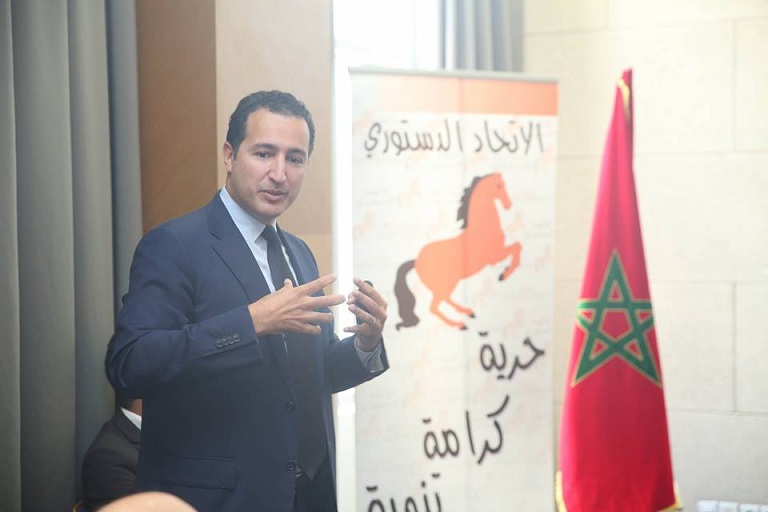
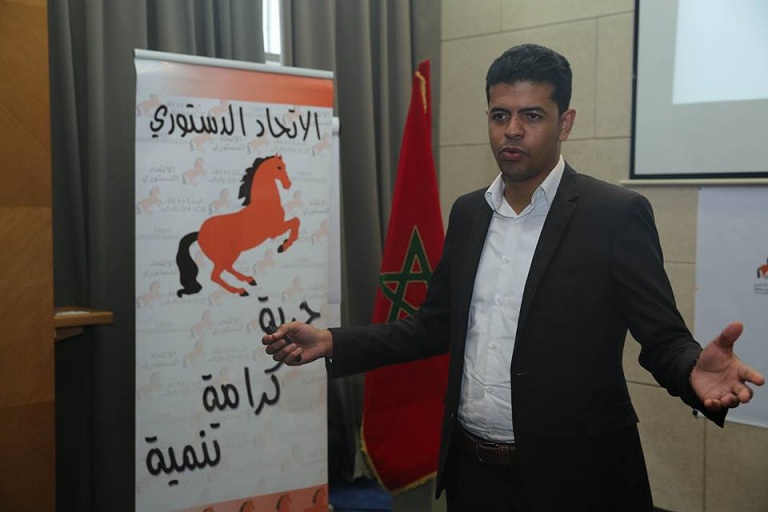
The Constitutional Union (UC) party, in partnership with the National Democratic Institute (NDI), hosted the sixth edition of its "Master Class" forum at the Ibis Hotel in Casablanca. The session focused on two primary themes: "The Development Model" and "Strengthening Communication Mechanisms for Youth," led by Othman El Ferdaous, Secretary of State for Investment, and Hamza El Rouijae, a alumnus of previous Master Class editions.
1. The Development Model (Presentation by Othman El Ferdaous)
Comparative Analysis of Global Models and Moroccan Specificities Othman El Ferdaous highlighted that the debate surrounding development models centers on the relationship between economic growth and democracy. He outlined two main international paradigms:
The Singaporean (Vertical) Model: Built on a strict top-down chain of command from state leadership to local officials (applied in China, the UAE, and Egypt). In China, elite selection proceeds hierarchically across the 90 million members of the Chinese Communist Party.
The Democratic (or Tunisian) Model: Based on coordination between appointed and elected leadership (found in Turkey, India, and other democracies).
The Moroccan Model: Distinguished by its complexity, balancing institutional appointments with democratic elections. Despite various constraints, it has shown steady progress over the years.
Major Constraints Facing the Moroccan Model El Ferdaous detailed the physical, geopolitical, and structural obstacles impacting the national economy:
Structural Constraints (Climate & Geopolitics): A 35% decline in rainfall since the 1950s directly affects economic growth. Furthermore, the lack of Maghreb regional integration and closed Moroccan-Algerian borders result in an estimated $100 billion loss in economic opportunity (forcing local manufacturing plants to import components from Europe rather than regional partners).
Linguistic & Institutional Constraints: The duality between the administrative capital (Rabat) and the economic capital (Casablanca) causes linguistic divergence and misalignment among elites. Additionally, limited English proficiency hinders international competitiveness, while the informal economy accounts for 80%, creating opacity and stifling expansion.
Industry, Regionalization, and Human Capital
Legal Framework & Investment Support: Domestic legal frameworks treat any company established on national territory as a Moroccan enterprise. The Industrial Development Fund allocates 24% of its aid to small and medium enterprises (SMEs).
Advanced Regionalization & Deconcentration: Advanced regionalization remains a strategic priority. The government is executing a deconcentration charter to shift decision-making authority from central ministries to regional branches.
Key Infrastructure Projects: Regional economic growth leverages major infrastructure investments initiated over the past decade, including the Tanger Med port, expanding highway networks, high-speed rail (Al Boraq), airport upgrades, and regional industrial hubs (e.g., the Tangier Industrial Zone and the Industrial Acceleration Plan in Souss-Massa).