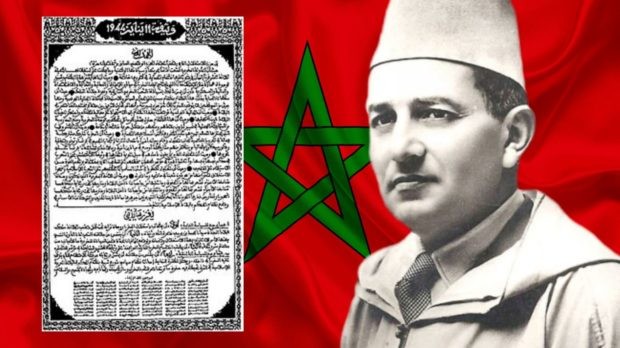
The Moroccan people celebrate this Saturday the 81st anniversary of the presentation of the Independence Manifesto on January 11, 1944. This landmark milestone in the national struggle reflects the nation's unwavering commitment to sovereignty, freedom, and the defense of its sacred values.
Commemorated by the veterans of the national resistance and the liberation army amid ongoing national mobilization, this historic occasion serves to inspire younger generations by highlighting the deep unity between the Alawite Throne and the Moroccan people.
Resisting Colonial Fragmentation
To counter the colonial apparatus established in the early 20th century—which divided the country into French (Central) and Spanish (North and South) protectorates alongside an international administration in Tangier—the Sovereign and the people mounted a multifaceted resistance. From armed uprisings in the Middle Atlas, the North, and the South, to political campaigns against the discriminatory 1930 colonial Dahir and the reformist demands presented in 1934 and 1936, the struggle remained continuous.
The Strategic Leadership of Late King Mohammed V
Ever since his accession to the Throne on November 18, 1927, Late King Mohammed V, Father of the Nation, galvanized the spirit of resistance. During the historic Anfa Conference in January 1943, His Majesty raised the issue of Morocco's independence directly with Allied leaders, citing Morocco's substantial contributions to liberating Europe from Nazism—a stance backed by U.S. President Franklin D. Roosevelt.
The Manifesto of January 11, 1944: A Vision for Independence and Governance
Signed by 67 prominent resistance figures, including a woman, the document explicitly demanded full national independence under the leadership of the legitimate Sovereign, Sidi Mohammed ben Youssef. The manifesto outlined two primary tracks:
Foreign Policy: Full independence, territorial integrity, accession to the Atlantic Charter, and participation in the Peace Conference.
Internal Reforms: A Royal-led reform dynamic aimed at establishing a consultative, democratic system safeguarding the rights and duties of all citizens.
This historic event, reinforced by the landmark 1947 Tangier Speech and the Sultan's refusal to yield to colonial pressure, led to His exile and sparked intensified resistance. This momentum paved the way for the triumphant return of the Father of the Nation and the official proclamation of independence in 1956.