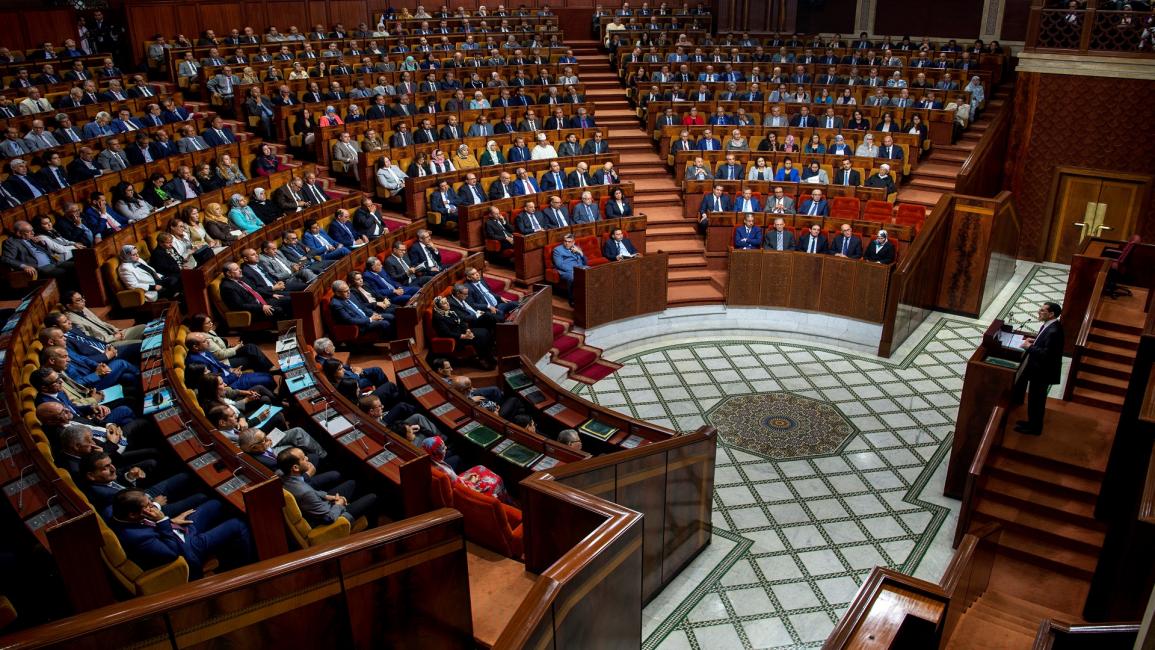
The House of Representatives adopted by majority, during a legislative session held yesterday evening, Bill No. 54.22 amending and supplementing Law No. 69.00 relating to State financial control over public enterprises and other bodies.
In an introductory speech on the bill, the Minister Delegate in charge of the Budget, Faouzi Lekjaa, stated that the adoption of this text "will enable us to implement the reform of the public procurement decree as soon as possible, as well as expand its scope of application to include all public institutions of an administrative nature, and other institutions subject to state financial control or special rules in the field of control."
Mr. Lekjaa explained that the objectives sought through expanding and unifying the scope of application of the public procurement decree can be summarized in standardizing and harmonizing public procurement management methods for all actors, adopting a unified reference framework for public buyers' transactions, responding as much as possible to the growing expectations of national and international economic actors regarding this unification, and adopting a distinct pillar for framing the public procurement process capable—through a unified reference system—of unifying concepts and ensuring a single interpretation of the regulatory framework for public procurement, as well as aligning legal texts with standards and rules adopted by international bodies that recommend establishing a unified framework for concluding and executing public procurement.
The government official stressed that the process of expanding the decree's scope of application began back in 2013, notably through the inclusion of territorial collectivities, architectural works, and some public institutions within a unified reference system for public procurement. He pointed out that the process of expanding this decree's scope continued within the framework of the partnership agreement concluded with the African Development Bank by adopting a national public procurement system for concluding contracts financed by this institution.
He added that further efforts have been made with other funding institutions to achieve the same objectives and urge them to adopt a unified national system related to public procurement. He highlighted that, in order to avoid the scattering of texts regulating the legal and institutional framework for concluding public procurement, a permanent committee was established within the deliberative body of the National Commission for Public Orders, tasked with monitoring the contracts of regions, prefectures, provinces, and communes, replacing the special committee that was previously linked only to territorial collectivities.
Mr. Lekjaa noted that in parallel, since 2013, the public procurement portal has been adopted as a single and unified portal for managing all components of the public order dematerialization program.
The Minister noted that Bill No. 54.22 amending and supplementing Law No. 69.00 proposes that public institutions' purchases be subject to the regulatory framework related to the conclusion of public procurement, with the exception of the National Agency for Strategic Management of State Contributions and Monitoring the Performance of Public Establishments and Enterprises, as well as the public institutions referred to in Table 1 annexed to the same law—which are the total institutions engaging in commercial activities making them ineligible for subjection to the provisions of this decree—as well as public law persons subject to State financial control, in addition to other public law persons subject to special rules in the field of control based on a list determined by decree.