


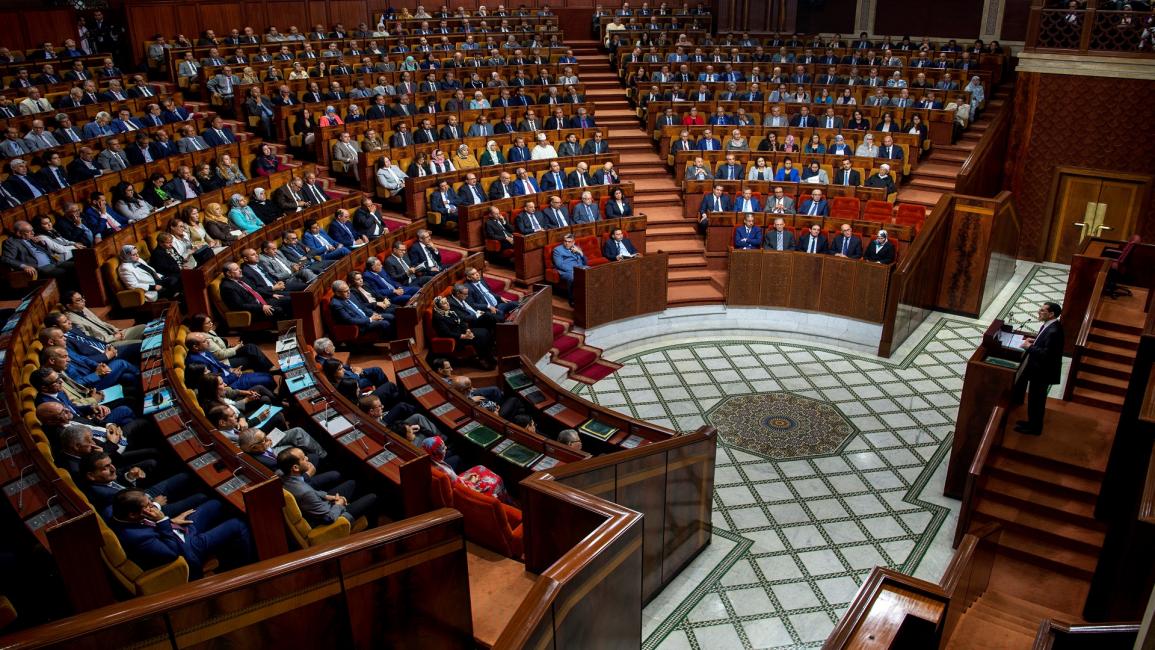
The House of Representatives unanimously adopts a bill relating to the Commercial Code and enacting special transitional provisions regarding payment deadlines.
The House of Representatives unanimously adopted, during a legislative session, Bill No. 69.21 amending Law No. 15.95 relating to the Commercial Code and enacting special transitional provisions regarding payment deadlines.
In an introductory speech on the bill, the Minister Delegate in charge of Relations with Parliament and Government Spokesperson, Mustapha Baitas, reviewed the main provisions contained in this legislative text. These notably include exempting natural and legal persons whose annual turnover is less than or equal to 2 million dirhams (excluding value-added tax) from the scope of application of payment deadlines stipulated in the bill.
The Minister stated that the bill includes setting the maximum payment deadline when parties agree at 120 days instead of 90 days, and adopting the invoice issuance date as the start for calculating the payment deadline for due amounts instead of the date of delivery of goods or execution of the service.
Under this text, an exceptional deadline not exceeding 180 days will be granted to professionals in special or seasonal sectors based on agreements concluded in this regard by their professional organizations through a decree enacted after consulting the Competition Council.
A quarterly electronic declaration system will also be imposed on the administration regarding invoices unpaid within the deadline, invoices fully or partially paid outside the deadline, and those not paid because they are the subject of a dispute before the court. The government authority in charge of finance, or a person delegated by it, is granted the power to monitor the credibility and accuracy of declarations, while determining the modalities of this control.
The bill also provides for guaranteeing the right of a natural or legal person to claim compensation for late payment of amounts due from the debtor in accordance with current legislation, and imposing a financial penalty for the benefit of the Treasury, the rate of which is determined by Bank Al-Maghrib's directive rate applied at the end of the first month of payment delay and at 0.85 percent for each additional month or part of a month, applied to the amount unpaid within legal deadlines for each invoice, inclusive of value-added tax.
The text includes financial penalties for breaching provisions relating to declarations and paying financial penalties upon maturity, organizing a dispute procedure for due amounts or part thereof, and determining the last day of the month in which goods were delivered, works executed, or services requested as the ultimate deadline for issuing the invoice.
During their interventions in the general discussion of this text, parliamentary deputies highlighted the importance of regulating payment deadlines and turning them into a supportive tool for investment rather than an obstacle, as a mechanism that falls within the context of enshrining contractual freedom in commercial relations between companies, administrations, and public institutions.
They stressed that the bill comes in implementation of the instructions of His Majesty King Mohammed VI, who pointed out in his speech on the occasion of the 65th anniversary of the King and People's Revolution the issue of payment deadlines as an obstacle to the normal functioning of enterprises.
The deputies also pointed out the importance of regulating payment deadlines related to the State, territorial collectivities, public establishments, and enterprises by taking a set of measures, including exceptional measures to support enterprises, especially micro, small, and medium-sized ones, to enable them to overcome their treasury difficulties. This includes reducing payment deadlines and improving their financing conditions to ensure their economic revival, strengthen their productive and competitive capacities, and protect them from bankruptcy.
